

I was a teacher for 15 years. In 2022, I journeyed out of teaching, and I learned many lessons about myself. When people ask me if I miss teaching, my answer returns without hesitation: no. I discovered that although I loved teaching, I didn’t like being a teacher. The profession didn’t suit me. For someone who lived most of her life outside the lines, I spent far too much time making little people stay in them.
Beginning Homeschool: Our Story
During those 15 years, if anyone asked me if I would consider homeschooling, I would adamantly decline. I could corral a classroom full of students, but teaching my own didn’t sound appealing. I loved my kids, and I loved being with them, but I also loved handing off that responsibility to someone else. I was definitely not enough for their education.
But I’ve always said that the things I love most in life are the things that God has chosen for me.
As I began remote work, we learned at the last minute that Baylee wasn’t able to attend preschool as we had planned. So, I ordered some curriculum books with “the plan” to homeschool her through K4, and then she would go to “real” school the next year.
I bought the books, got her a desk and supplies, and psyched her up for homeschooling. Admittedly, she would miss her friends, but all day, every day with Mom seemed like a good plan for her.
In the first week, she easily breezed through 20 lessons—not because she was a genius or because I was a fabulous teacher. It was because she chose her pace and loved finishing worksheets. Meanwhile, we took trips to the library and the park and cuddled on the couch while I worked from home.
In a couple of weeks, she was a reader, and her education looked a little different. Counting in the car, lessons at the library, and learning while we were living. I had come to fully understand why people chose homeschooling. Here are a few things we got to do while homeschooling:
- Weekly trips to the library
- Play dates with her friends
- Coffee dates with my friends (and cake pops for Baylee)
- A spontaneous day hanging with our favorite singing group, CAIN (definitely a highlight!)
- Field trips and crafts and trips to the store and sleeping in and LIVING LIFE.
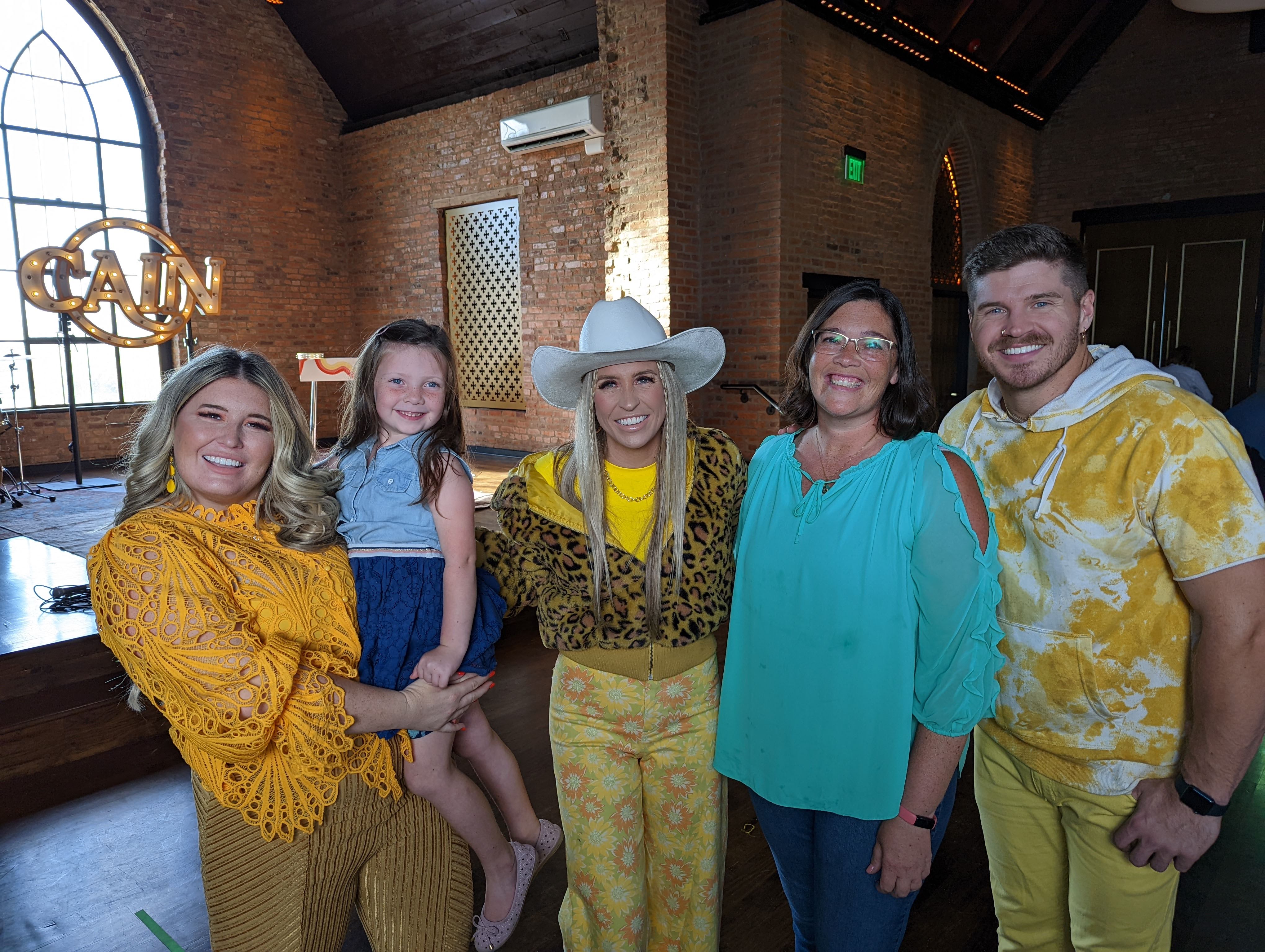
A few months later, I was faced with the decision to homeschool my three youngest children, and I jumped at the opportunity. This is the story of how we began to homeschool as a family.
The Five Flavors of Homeschool
As I began to research homeschooling elementary-age children, I asked some friends in a Facebook group for curriculum recommendations and general advice. One mama recommended a video on The Five Flavors of Homeschool. If you are considering homeschooling, I highly recommend watching this video first, but here’s a short breakdown of what you’ll learn.
Homeschooling doesn’t have to look like school at home. It can, if that’s the flavor that suits you, but there is a variety of ways to homeschool successfully.
- Traditional – This method mimics a typical classroom setting, using textbooks, workbooks, and question-and-answer drills to cover various subjects.
- Classical – This homeschooling method uses a three-stage approach where students progress from memorization, to critical thinking, to persuasive communication.
- Unschooling – This flexible style follows the child’s interests, tailoring learning experiences around their current fascination (butterflies, race cars, etc.).
- Unit Studies – This approach uses a chosen theme (like Ancient Egypt) to integrate various subjects (history, science, art) into a cohesive learning unit.
- Charlotte Mason – Inspired by natural learning, this method uses rich literature, real objects, and narration to engage students and cultivate lifelong learning habits. It emphasizes variety and avoids rote memorization techniques.
This idea was revolutionary for me. When people asked me what I was going to do, I would always answer, “I only know what I’m not going to do.” I’d spent the better part of 15 years living under a rigid schedule and subjecting my kids to far too much busyness. We’d had enough of that.
I decided to use the Charlotte Mason method, with a side of unit studies and a dash of unschooling. It’s OK if it’s unconventional or looks different each day. Life outside the lines, right?
Homeschooling: Our Life Outside The Lines.
Armed with a new understanding of homeschooling and a list of curriculum recommendations, I began researching the direction I wanted to take.
I spent many hours looking at websites, reading blogs, and watching YouTube videos on each curriculum. When I narrowed down my choices, I let my kids watch with me, and this really excited them. Here’s what we came up with.
Our Curriculum
Kindergarten—Because I taught Kindergarten for so many years, A Beka was the obvious choice. Baylee used A Beka for Phonics, Numbers, and Reading. We did Bible, History, and Science family style, so we used separate curricula for those.
Bible–Apologia, The Word In Motion Old Testament
We do Bible family style. We chose a survey of the Old Testament through Apologia. During the first 15 weeks, they learned every major theme of the Old Testament with hand motions, and during the last 15 weeks, they took a closer look at the individual books. We watch a short instructional video on Monday and then work through other readings and activities for the rest of the week.
You can purchase a student journal separately, and I recommend this if you are teaching elementary-aged children. We also worked on our own memory verses and listened to large portions of Scripture using the Bible.Is app–If you’ve never used this, I highly recommend it! The readings are dramatized with music and different voices reading for each person.
Language (including reading and handwriting) – The Good and The Beautiful
The Good and the Beautiful places students in levels (instead of grades) based on reading ability. Because Jase was a little ahead and Bo was a little behind, I put them on the same level. It worked out beautifully! It gave Jase the challenge that he needed, while Bo’s natural ability was reinforced, and his confidence strengthened. Bonus: These guys love to be together, and it saved me time to teach them together. Win-win!
I love a few things about The Good and the Beautiful:
- It’s completely open and go. I did very little planning (if any). If something requires advance planning, they tell you several lessons before.
- All the Bible verses are KJV. That’s not a deal-breaker for me, but it definitely simplifies things.
- No spelling tests. I repeat: no spelling tests. I’ll talk about this at length another time, but if you’ve ever seen me on my Spelling Soapbox, you’ll know that I despise spelling tests. Also, Bo now spells better than he has his whole life. So there’s that.
- It incorporates many different disciplines, including geography, art, and other cultures.
Math – Saxon Math with Nicole the Math Lady
Our children were already learning Saxon Math, so this was a super simple transition. Nicole the Math Lady teaches Saxon Math lessons from 3rd grade through 12th. You pay a subscription fee for your family. Ours was $99 for the year which buys 5 separate learning accounts.
My kids love it. They watch their videos and do their worksheets, and I follow up and supplement where they need it. She handles all the Math instruction, and I help them when they have questions. When they take tests, I note the lessons where they are struggling with concepts, and they go back to watch the videos again.
Again, this requires very little planning, and both kids are progressing at their own level.
History – The Good and The Beautiful History, Year 1
We do History and Science on alternating days. In The Good and the Beautiful History curriculum, I read to the kids, or they listen to a dramatized audio lesson, and occasionally I supplement with worksheets.
The first 30 units started with ancient history and traveled through the Middle Ages into the Scientific Revolution. The next 30 units teach American History. I think this curriculum might be discontinued from TGATB, but you can find it for sale through online groups.
Science – Apologia
Bo absolutely loves the study of outer space, so we began with Astronomy. This has been the best choice for our family this year. You can purchase a student journal separately, but we rarely use it. I simply read from the textbook, and we discuss it, act it out, or do an experiment.
Homeschool Groups
Everyone I know uses a homeschool umbrella. But since I had an aversion to answering to someone else (there are no lines, remember?), I began to research independent homeschooling in Tennessee. The requirements are surprisingly easy!
- Initial paperwork – submit required paperwork, like birth certificates and shot records for the kids, a high school diploma for me, and an intent to homeschool (supplied online by the state of Tennessee–you declare your child’s grade level and the curriculum you’ve chosen, even though there are NO requirements about what you actually teach).
- The kids in 5th, 7th, and 9th grade take the TCAP at the RobCo Board of Education. This process was so easy, and Bo really enjoyed it.
- Record attendance on a checklist and send it in at the end of the year. (180 days, including summer trips, learning activities while on a family vacation, and major projects that we completed on a Saturday or Sunday). You get to choose.
That’s it! We may use an umbrella school in the future as we start having high school students, but it worked really well for us this year with my elementary kids.
So You Think You Want to Homeschool?
I’ve spoken to many parents who are considering the switch. I would never try to persuade a parent to homeschool if they truly believe that traditional school is the best route for their kids. Public and private institutions have many benefits.
However, if you are wondering if this could work for you, my answer is a resounding YES! It can be a little crazy, and it’s not always perfect. But that’s our life outside the lines. It’s like a cup that runs over.
You see, sometimes, when a cup overflows, it makes a mess. Our homeschool experience hasn’t been neat and tidy, but the richness of it all made it worthwhile. We can pursue what excites us, even if it’s unconventional. It may not be for everyone, but for those who embrace it, it’s a life of vibrant authenticity.
 A Cup That Runs Over
1 thought on “So You Want to Homeschool? Our Story of Homeschooling Beginnings”